What Is Agricultural Engineering? A Complete Guide for Aspiring Engineers

Pratik Kadam
Author
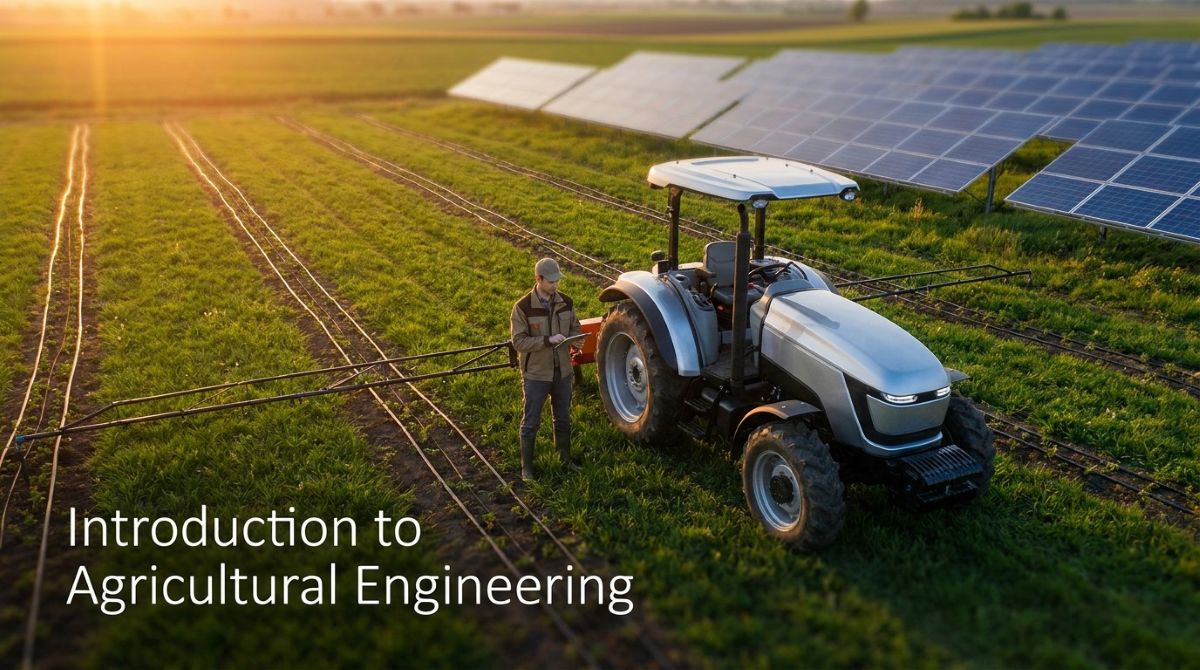
Introduction to Agricultural Engineering
If you love technology, sustainability, and farming, agricultural engineering might be your perfect career path. This field basically blends engineering principles with agricultural sciences to improve farming efficiency.
Young aspiring engineers (aged 18–24) exploring global engineering colleges often wonder – what is agricultural engineering? Simply put, agricultural engineering is all in all about designing innovative solutions for food production, machinery, and environmental conservation.
What Is Agricultural Engineering?
Agricultural engineering is a branch of engineering that focuses on agricultural machinery, irrigation systems, soil management, and bioenergy. It ensures sustainable farming while increasing productivity.
Unlike traditional engineering fields, it combines mechanical, civil, electrical, and chemical engineering with agronomy. The goal is indeed to solve real-world farming challenges using technology.
“Agricultural engineers don’t just build machines – they build the future of food.”
Why Study Agricultural Engineering?
1. High Demand in the Agri-Tech Industry
With the global population rising and all things considered, efficient food production is crucial. Companies significantly need skilled agricultural engineers to develop automated tractors, drones, and smart irrigation systems.
2. Diverse Career Opportunities
Graduates can work in:
- Farm equipment manufacturing
- Renewable energy (biofuels, solar-powered systems)
- Environmental conservation
- Food processing & storage technology
3. Global Relevance
Countries like the USA, Germany, Netherlands, and India generally invest heavily in agri-tech. Studying agricultural engineering opens doors to international job opportunities all of a sudden.
4. Sustainability & Innovation
If you care about climate change and eco-friendly farming, this field lets you create green solutions.
Key Subjects in Agricultural Engineering
Most engineering colleges offer core subjects like:
1. Farm Machinery & Power Systems
Learn not only to design tractors, harvesters, but also futuristic robotic farming tools.
2. Soil & Water Conservation
Study irrigation techniques, drainage systems, and also erosion control.
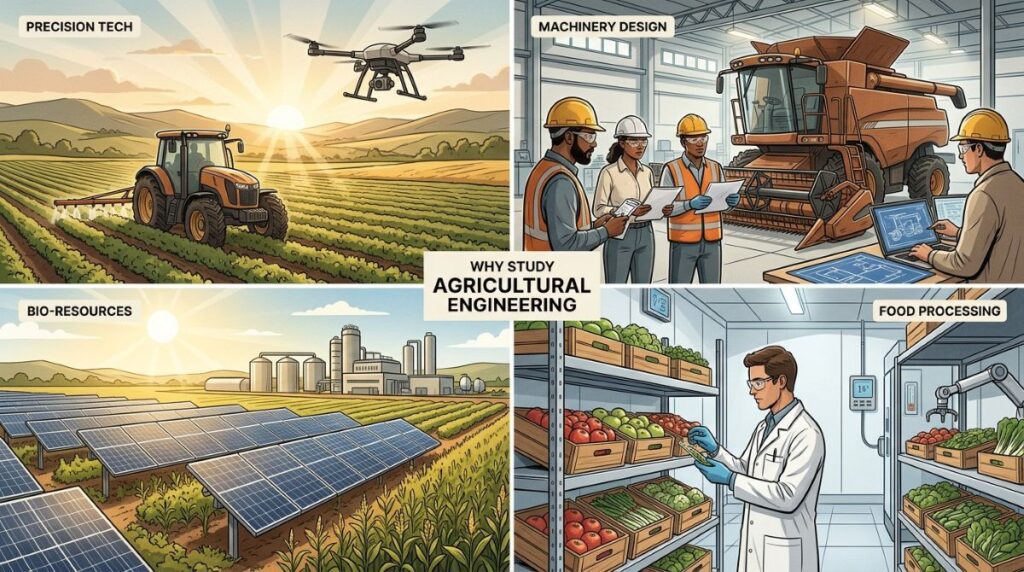
3. Food Process Engineering
Explore food storage, packaging, and also processing technologies.
4. Renewable Energy Applications
Work not only on biogas plants, solar-powered farms, but also biofuel production.
Top Engineering Colleges for Agricultural Engineering
If you’re searching for the best agricultural engineering colleges, consider these globally recognized institutions:
1. Wageningen University & Research, Netherlands
- Firstly, Ranked #1 in Agriculture & Forestry (QS Rankings)
- Also, focuses on sustainable farming and food security
2. University of California, Davis (USA)
- Offers cutting-edge research in bioenergy and precision agriculture indeed.
3. Indian Institute of Technology (IIT) Kharagpur, India
- In particular, offers strong curriculum in farm mechanization and irrigation tech.
4. ETH Zurich, Switzerland
- Specializes in environmental engineering and agri-robotics
Career Paths in Agricultural Engineering
After graduation, you can pursue roles like:
- Agricultural Equipment Designer (Develop next-gen farming machines)
- Irrigation Engineer (Optimize water usage in farms)
- Environmental Consultant (Advise on sustainable land use)
- Food Processing Technologist (Improve food safety & storage)
According to the U.S. Bureau of Labor Statistics, agricultural engineering jobs will grow 5% by 2030, faster than many other fields.
Future Trends in Agricultural Engineering
1. Precision Farming
Using AI, drones, and IoT sensors to monitor crops and soil health.
2. Vertical Farming
Designing urban farms in skyscrapers to save space and resources.
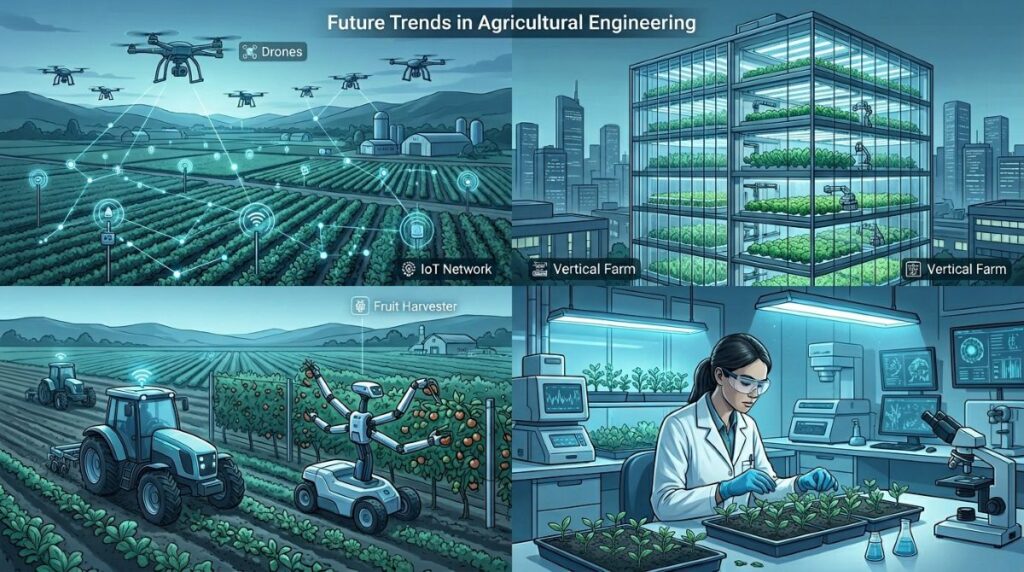
3. Automation & Robotics
Self-driving tractors and fruit-picking robots are becoming mainstream.
4. Climate-Resilient Crops
Engineering drought-resistant seeds to combat climate change.
Final Thoughts: Is Agricultural Engineering Right for You?
If you enjoy problem-solving, sustainability, and hands-on innovation, agricultural engineering is a rewarding career. It merges tech and farming and also makes it ideal for future-focused engineers.
Explore top engineering colleges offering this program and finally step into a field that feeds the world sustainably
On the other hand, for more information and options, visit Top Engineering Colleges.
Reference:
- QS International. (2025, July 30). QS World University Rankings for Agriculture & Forestry 2025. Top Universities. https://www.topuniversities.com/university-subject-rankings/agriculture-forestry