AI Engineers Are Building the Future — Should You Join Them?

Pratik Kadam
Author
Introduction
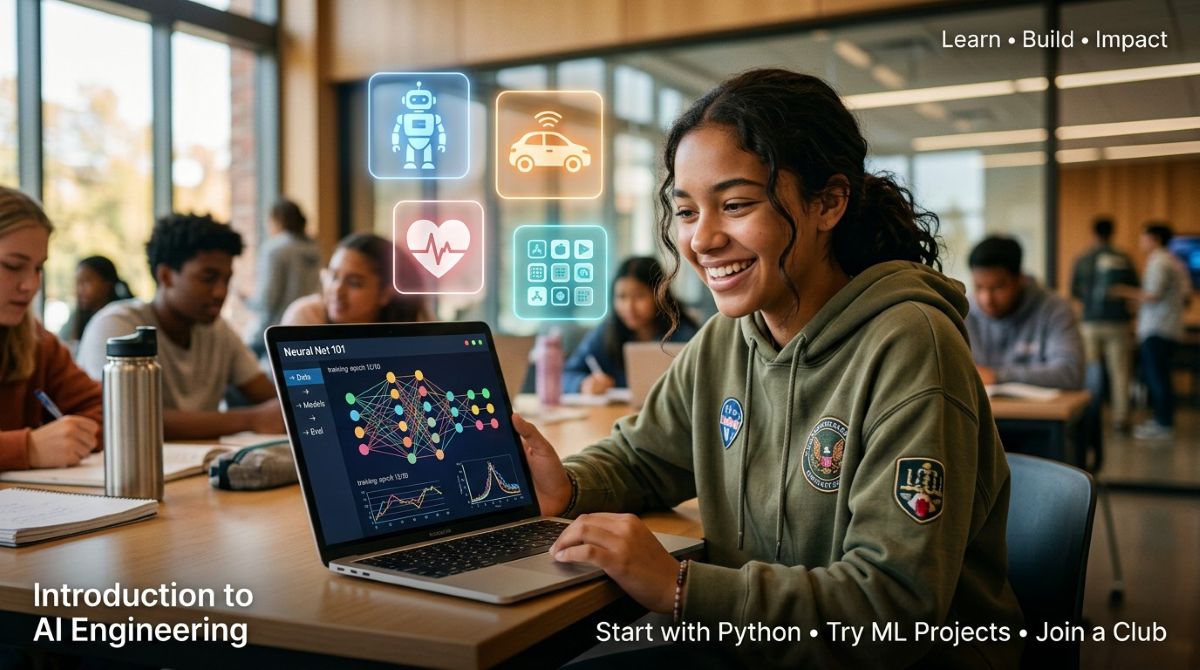
Artificial Intelligence is changing how we live and learn. It powers apps, cars, and even hospitals today. Many students now ask about this exciting field. Artificial Intelligence Engineering mixes coding with smart problem solving. It helps machines think and learn from data. As a result, industries adopt AI faster than ever. Teens today can shape tomorrow using these skills. Accordingly, learning AI early gives a strong advantage. This guide explains everything in simple terms. It also shows careers, subjects, and future demand clearly.
Key Takeaways
- AI Engineering combines coding, math, and real-world problem solving
- It powers apps, robots, and smart systems globally
- Career demand is rising across many industries
- Students need strong basics in math and programming
- AI offers global opportunities and innovation-driven roles
What is Artificial Intelligence Engineering
Artificial Intelligence Engineering focuses on building intelligent systems. These systems learn from data and improve automatically. In other words, machines perform tasks without constant human input. Engineers design models using algorithms and datasets. Accordingly, these models predict outcomes or recognize patterns.
AI Engineering combines computer science, mathematics, and statistics. It also uses machine learning and deep learning methods. For example, chatbots and recommendation systems use AI. As a result, businesses improve efficiency and user experience.
AI engineers build tools that think like humans. However, machines still follow programmed logic. This field grows rapidly due to data availability. Consequently, more companies need skilled AI engineers.
Students often start learning through simple online guides before advanced topics. For instance, a beginner-friendly resource on artificial intelligence fundamentals can explain core ideas clearly. As a result, learners build strong basics and gain confidence early.
Core Technologies in AI Engineering
Machine Learning
Machine learning teaches computers using data and patterns. Models improve after analyzing large datasets. For instance, spam filters learn from email examples. Consequently, accuracy improves over time.
Deep Learning
Deep learning uses neural networks inspired by the human brain. These networks process complex data like images. As a result, systems recognize faces or speech easily.
Natural Language Processing
NLP helps machines understand human language and text. Chatbots and translators use this technology. For example, virtual assistants respond to commands quickly.
Computer Vision
Computer vision allows machines to see and interpret images. It helps in medical scans and security systems. Accordingly, industries automate visual tasks effectively.
Why Study Artificial Intelligence Engineering
AI Engineering offers exciting opportunities for future-focused students. It blends creativity with technical skills. As a result, learners build real-world solutions early.
Firstly, AI demand is rising across industries globally. Companies need skilled professionals for smart automation. Consequently, job opportunities increase steadily.
Secondly, AI allows work on meaningful problems. For instance, engineers improve healthcare and farming systems. Therefore, the work feels impactful and innovative.
Thirdly, AI offers global exposure and collaboration. Students can work with international teams easily. In addition, many universities offer AI-focused programs.
Key Subjects You Will Study
AI Engineering includes several important subjects. These subjects build strong technical knowledge.
Mathematics and Statistics
Math forms the base of AI systems. Topics include probability, algebra, and calculus. Accordingly, students understand how models make decisions.
Programming Languages
Students learn Python, Java, or C++. These languages help build AI applications. As a result, coding becomes an essential skill.
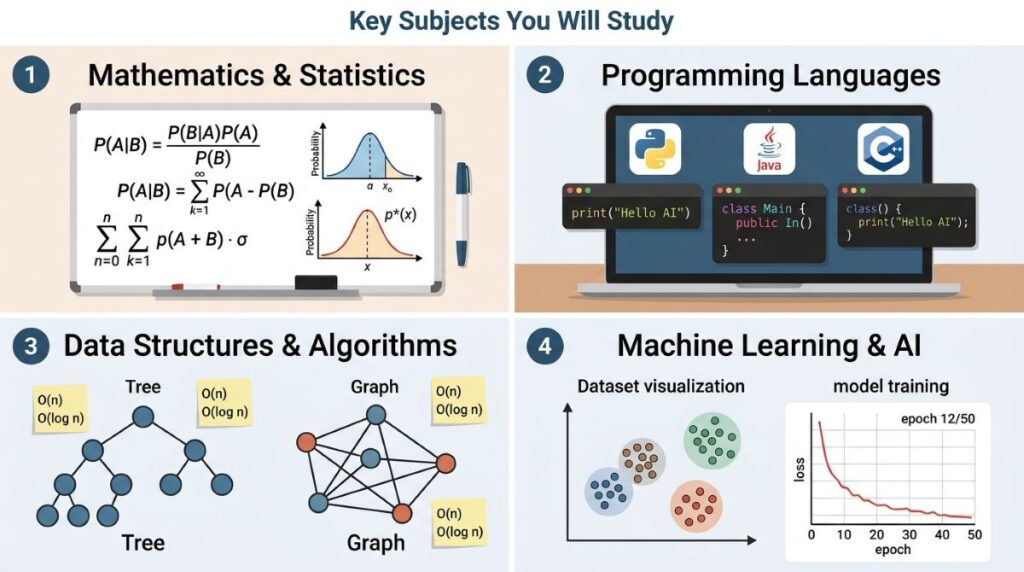
Data Structures and Algorithms
These topics improve problem-solving efficiency. They help manage and process data effectively. Consequently, systems run faster and smarter.
Machine Learning and AI
This subject focuses on training models and evaluating results. Students work on real datasets. Therefore, they gain practical experience.
Career Paths in AI Engineering
AI Engineering offers many exciting career roles. Each role focuses on different skills and tasks.
Popular Career Roles
- AI Engineer
- Machine Learning Engineer
- Data Scientist
- Robotics Engineer
- NLP Engineer
Each role requires coding, analysis, and innovation. As a result, professionals work on advanced technologies.
Job Demand Overview
| Industry | AI Usage Example | Demand Level |
|---|---|---|
| Healthcare | Disease prediction systems | High |
| Finance | Fraud detection | High |
| E-commerce | Product recommendations | Very High |
| Automotive | Self-driving systems | Growing |
| Education | Personalized learning tools | Rising |
This table shows AI demand across major industries. Consequently, students have many career choices.
Future Trends in AI Engineering
AI continues to evolve with new innovations. These trends shape future careers.
Automation and Robotics
Robots perform tasks with minimal human help. Industries use them for efficiency. As a result, productivity increases significantly.
AI in Healthcare
AI helps doctors diagnose diseases early. It also improves treatment plans. Therefore, healthcare becomes more accurate.
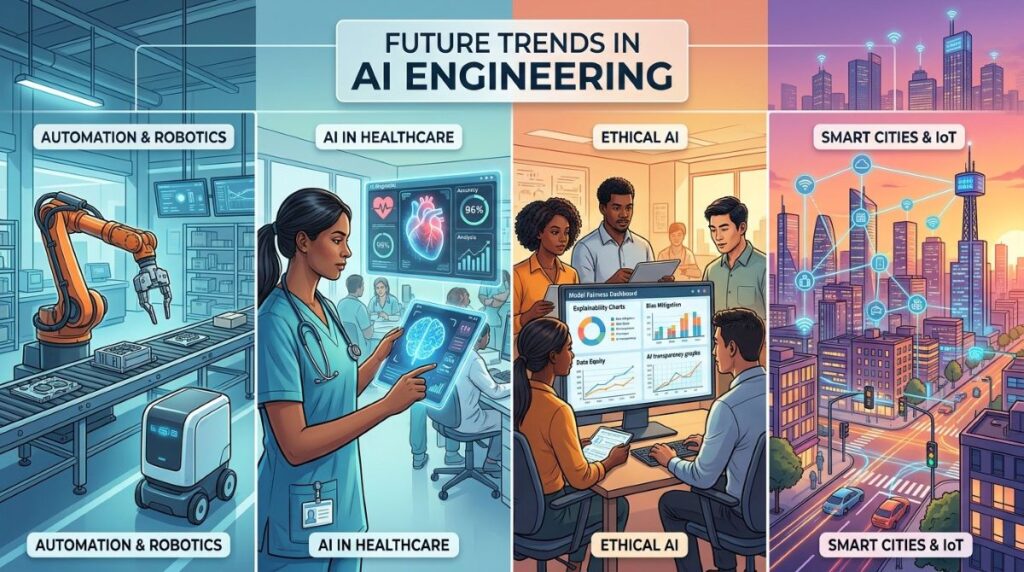
Ethical Artificial Intelligence Development
Engineers focus on fairness and transparency. They ensure AI systems avoid bias. Consequently, trust in AI increases.
Smart Cities and IoT
AI integrates with smart devices and infrastructure. Cities become more efficient and connected. Accordingly, daily life improves for people.
Chart: AI Adoption Growth
| Year | Adoption Rate |
|---|---|
| 2020 | 35% |
| 2022 | 50% |
| 2024 | 65% |
| 2026 | 78% |
This chart shows steady growth in AI adoption. As can be seen, industries adopt AI rapidly.
Skills Needed to Become an AI Engineer
To succeed, students must develop key skills. These skills combine technical and analytical thinking.
Essential Skills List
- Strong mathematics foundation
- Programming knowledge
- Problem-solving ability
- Data analysis skills
- Logical thinking
These skills help build efficient AI systems. Consequently, students perform better in projects.
Is Artificial Intelligence Engineering Right for You
AI Engineering suits curious and creative learners. It requires patience and consistent practice. However, rewards are significant in the long term.
If you enjoy coding and solving problems, this field fits well. In addition, interest in technology helps learning faster. Consequently, students stay motivated throughout their journey.
Conclusion
Artificial Intelligence Engineering is shaping the future of technology. It offers exciting opportunities and meaningful work. As a result, more students choose this path every year.
The field combines coding, math, and innovation effectively. Therefore, it prepares students for modern challenges. In summary, AI Engineering is a strong career option.
FAQs about Artificial Intelligence
Artificial Intelligence Engineering focuses on building smart machines that can learn from data. These systems perform tasks like humans. For example, they can recognize speech, images, and patterns. As a result, AI improves efficiency in many industries.
Students need strong basics in mathematics, programming, and data structures. Subjects like machine learning and statistics are also important. In addition, logical thinking helps solve complex problems. Therefore, a solid foundation is essential.
Yes, AI Engineering is a growing career with high demand globally. Many industries use AI for automation and innovation. Consequently, students get diverse job opportunities. It is suitable for those interested in technology and problem solving.
AI engineers need programming, analytical thinking, and problem-solving skills. Knowledge of Python and machine learning is important. In addition, understanding data helps build better models. As a result, strong skills improve career growth.
Students can become AI engineers, data scientists, or robotics experts. Other roles include machine learning engineers and NLP specialists. These careers focus on building smart systems. Consequently, opportunities exist in many industries worldwide.
References
Cambridge University Press. (n.d.). AI EDAM (Artificial Intelligence for Engineering Design, Analysis and Manufacturing). Cambridge Core. https://www.cambridge.org/core/journals/ai-edam
Elsevier. (n.d.). Engineering Applications of Artificial Intelligence. ScienceDirect. https://www.sciencedirect.com/journal/engineering-applications-of-artificial-intelligence
Elsevier. (n.d.). AI Open. ScienceDirect. https://www.sciencedirect.com/journal/ai-open